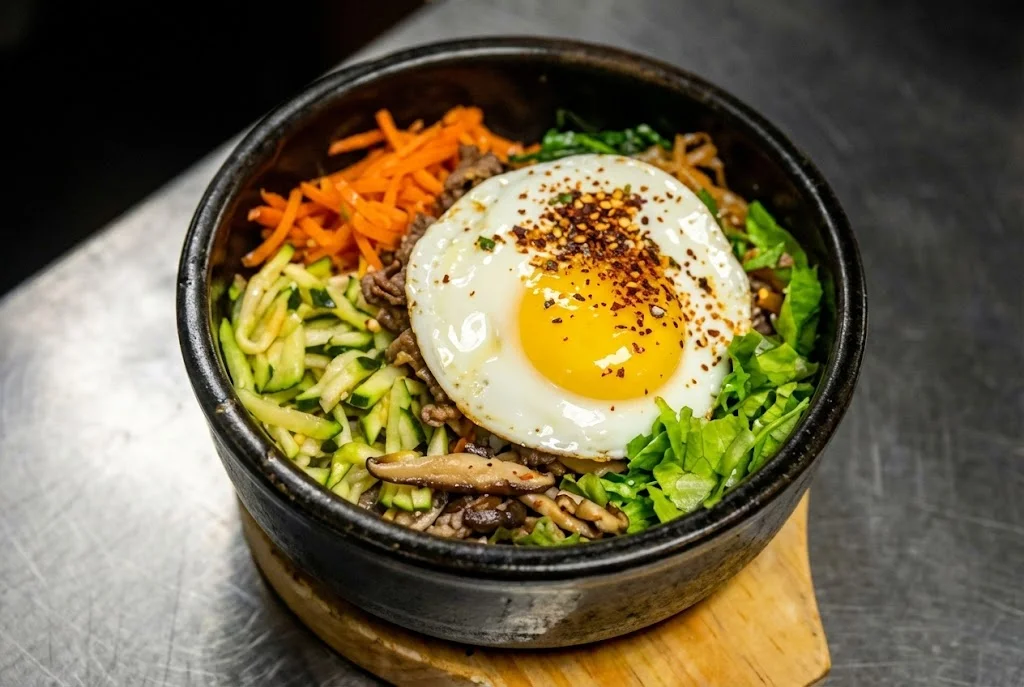
What Is Bibimbap & Why Everyone Loves It in Jackson Hole
If you've ever searched for what is bibimbap or looked for a bibimbap Korean dish near you while exploring Jackson Hole, you're not alone. After a long day on the trails or the slopes, most people want a meal that is warm, filling, and easy on the stomach. Bibimbap checks every one of those boxes, and it has quietly become one of the most loved meals in the area for exactly that reason.
What Is Bibimbap?
Bibimbap is a traditional Korean dish that translates to "mixed rice." It is a bowl of warm steamed rice topped with seasoned vegetables, a protein of your choice, and a bold sauce that brings everything together. The process of mixing all the components before eating is what makes this bibimbap Korean dish so unique. Every spoonful carries a bit of everything in the bowl.
The dish has been part of Korean culinary tradition for centuries, originally developed as a practical way to use leftover vegetables and rice. Over time it became a celebrated staple of Korean cooking. Today, restaurants put their own spin on it while staying true to the core idea: quality ingredients, carefully prepared, served together in one bowl.
What Is in Bibimbap?
Understanding what is in bibimbap helps explain why it suits so many different diets and preferences. A standard serving includes:
- Steamed white rice as the base
- Seasoned vegetables such as spinach, bean sprouts, mushrooms, zucchini, and carrots
- A protein such as beef, chicken, tofu, or a fried egg
- Gochujang sauce, a Korean chili paste, served on the side or mixed in
- Sesame oil and sesame seeds as a finishing touch
- Kimchi served alongside as a traditional fermented side
What sets an authentic bibimbap apart is that each vegetable is seasoned and cooked separately before being placed in the bowl. This extra step creates distinct layers of flavor rather than one uniform taste, which is why mixing everything together at the table is such an important part of the experience.
Popular Types of Bibimbap
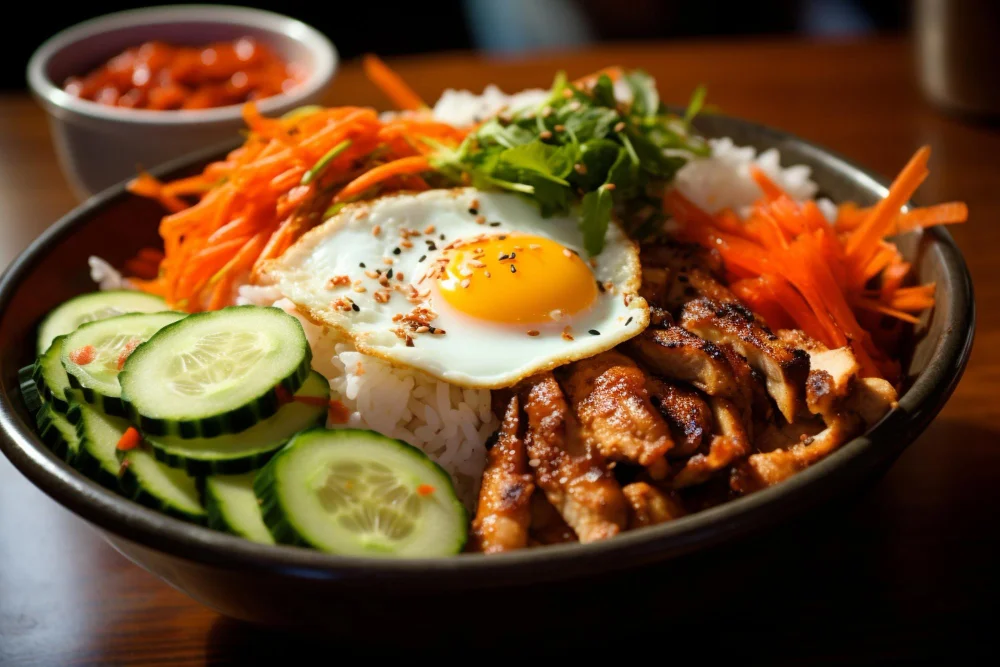
Chicken Bibimbap
Chicken bibimbap is the most popular choice for first-timers. The chicken is typically marinated in soy sauce, garlic, and ginger before being grilled, giving it familiar savory flavors that do not overpower the vegetables or sauce. It is approachable, well-balanced, and a reliable starting point for anyone new to Korean food.
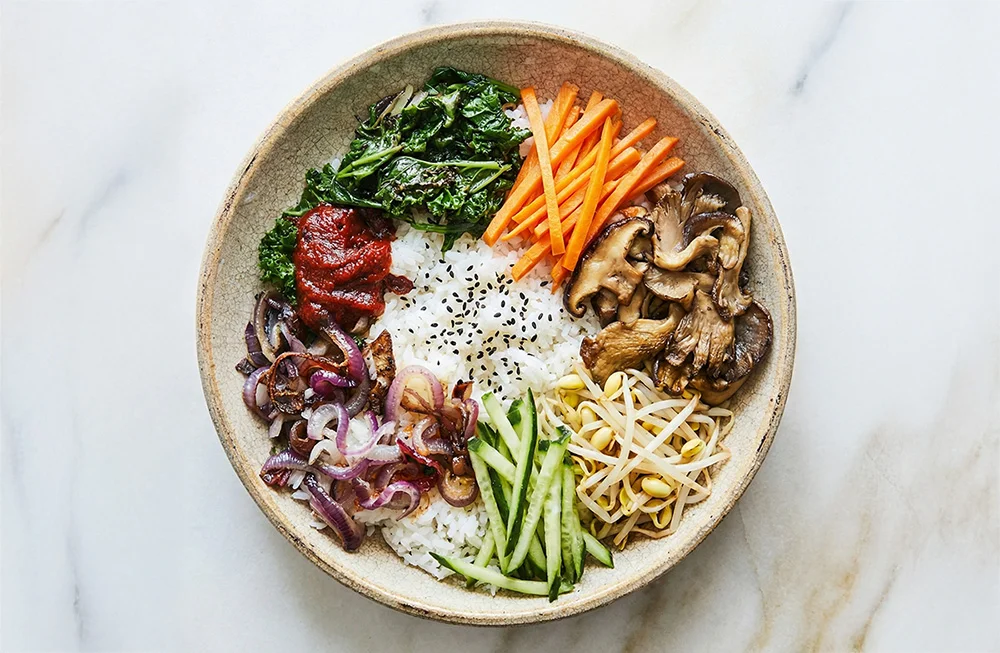
Vegetarian and Vegan Bibimbap
Vegetarian bibimbap and vegan bibimbap have grown in popularity alongside the wider shift toward plant-based eating. These versions put the vegetables front and center, with seasoned tofu, tempeh, or extra mushrooms filling the protein role. The dish is naturally built around produce, so removing meat does not take anything away from the overall experience. It is just as filling and just as flavorful.
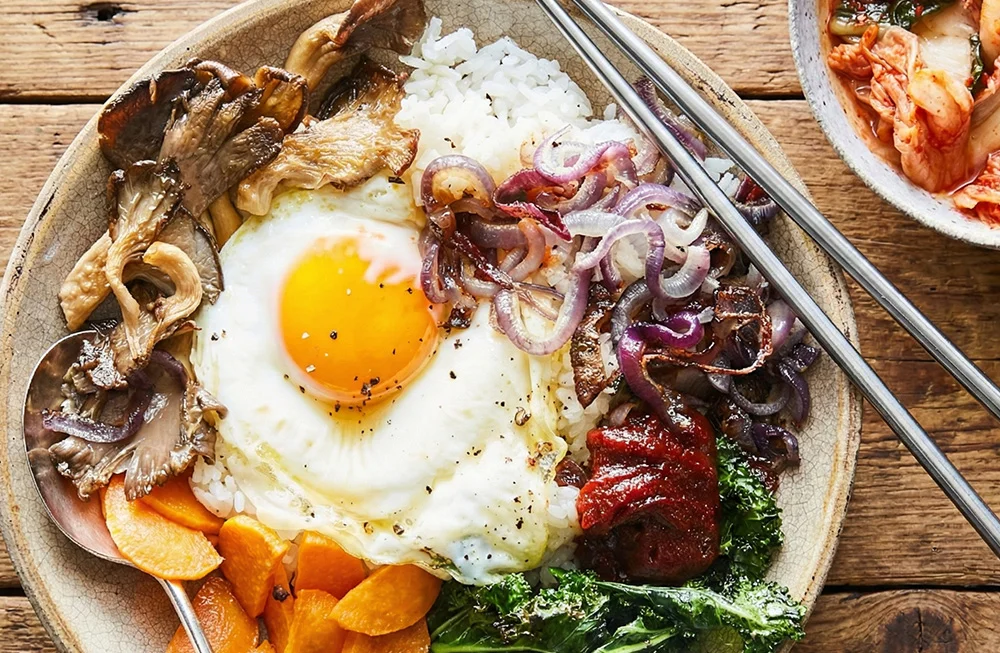
Sheet Pan Bibimbap
Sheet pan bibimbap is the home-cook's version of this dish. Rather than preparing each vegetable separately on the stovetop, everything goes onto a single baking sheet and into the oven. It simplifies the process considerably and has become popular among people who want to recreate bibimbap at home without spending an hour in the kitchen. For the full traditional experience, a restaurant kitchen is still the better option.
Is Bibimbap Healthy?
Yes, bibimbap is genuinely one of the healthiest meals you can order at a restaurant. It is a balanced meal by design, combining complex carbohydrates from the rice, lean protein, and a wide range of vegetables in one bowl. The vegetables provide vitamins, minerals, and fiber. The protein supports muscle recovery and keeps hunger at bay. The fermented kimchi served alongside adds probiotics that support gut health.
The dish is also easy to customize. More vegetables, less rice, sauce on the side, or a lighter protein are all straightforward requests. Unlike many restaurant meals where adjustments are complicated, bibimbap is transparent about its ingredients and easy to tailor to specific health goals.
Calories in Korean Bibimbap
Calories in Korean bibimbap vary depending on the protein chosen, the portion size, and how much sauce is added. A tofu or vegetable-heavy version typically falls somewhere between 400 and 500 calories. A beef bibimbap with a full rice portion can sit closer to 700 to 900 calories. The range is wide enough to suit different goals.
People who have been active all day and need to refuel can eat a full portion without worry. Those keeping a closer eye on their intake can ask for a smaller rice serving or substitute extra vegetables. The flexibility is built into the dish itself, which is part of what makes it such a practical choice.
Why Bibimbap Is So Popular in Jackson Hole
Jackson Hole has always had a strong appetite for food that matches the lifestyle. Outdoor enthusiasts, families, and international visitors pass through constantly, and they want dining options that go beyond standard American comfort food. Korean food and Asian food more broadly have filled that gap in a meaningful way, and bibimbap has led that charge.
The dish works across seasons. In winter, it serves as warming, hearty comfort food after a day on the mountain. In summer, the lighter, vegetable-forward versions appeal to hikers and cyclists looking for something fresh and restorative. The colorful presentation has also made it a favorite among visitors who share their meals online, giving it a consistent word-of-mouth presence that keeps new diners walking through the door.
Where to Find Bibimbap Near Me in Jackson Hole
Many visitors and locals searching for bibimbap near me are looking for something filling, warm, and easy to enjoy after a day outdoors. Bapp Korean Restaurant is Jackson Hole's dedicated spot for authentic bibimbap, with a menu that covers traditional preparations and modern adaptations. Spice levels can be adjusted, and the options work across a range of dietary needs.
The restaurant is conveniently located for both downtown visitors and local residents. The staff know the menu well and are happy to walk anyone through the options, whether it is their first time trying Korean food or their tenth visit this season.
Final Thoughts
Bibimbap is one of those rare dishes that works for almost everyone. It is beginner-friendly enough for someone who has never tried Korean food, and customizable enough to keep regulars coming back with different combinations each time. Locals love it for its consistency and nutrition. Visitors love it because it delivers exactly what they need after a day of activity in Jackson Hole. Whether the choice is chicken bibimbap, a fully vegan bowl, or the classic beef preparation, the result is always a satisfying, well-balanced meal that earns its place on any table.
Visit Bapp Korean Restaurant in Jackson Hole
If you are looking for a delicious bibimbap in Jackson Hole, Bapp Korean Restaurant is a great place to visit. Many people search for “bibimbap near me,” but you can find fresh and tasty options right here.
As a trusted Korean Restaurant in Jackson Hole , the friendly staff will help you choose the perfect bowl based on your taste and dietary needs. Every dish is made with care and full of flavor. It’s simple, comforting Korean food that makes every visit special.
FAQs
What does bibimbap taste like?
Bibimbap has a savory, slightly nutty, and mildly sweet flavor profile. The vegetables bring earthy depth, sesame oil adds warmth, and the gochujang sauce contributes heat and complexity. The spice level is fully adjustable, making it suitable for a wide range of palates.
Can I order bibimbap without spice?
Yes. The sauce is typically served on the side, so each person controls how much goes into the bowl. Mild and no-spice versions are available and work well for children or anyone sensitive to heat.
What makes bibimbap different from other rice bowls?
Each vegetable in bibimbap is seasoned and cooked separately before being placed in the bowl. This gives every ingredient its own distinct flavor, so mixing everything together creates a layered result rather than a single blended taste. Most other rice bowls do not follow this preparation method.
Is bibimbap gluten-free?
Most components are naturally gluten-free. Diners with gluten sensitivities can request gluten-free soy sauce as a substitute. It is always worth confirming with the restaurant directly based on specific dietary requirements.
What protein should a first-timer choose?
Beef or chicken bibimbap is the most common starting point. Both pair naturally with the vegetables and sauce, and their familiar flavors make the dish easy to enjoy for someone trying Korean cuisine for the first time.
Is bibimbap served hot or cold?
Bibimbap is served warm. Some versions arrive in a hot stone bowl called a dolsot, which keeps the rice crispy at the bottom and the dish hot throughout the meal. Standard versions are also warm but served in a regular bowl.


